
Single-pan mixer
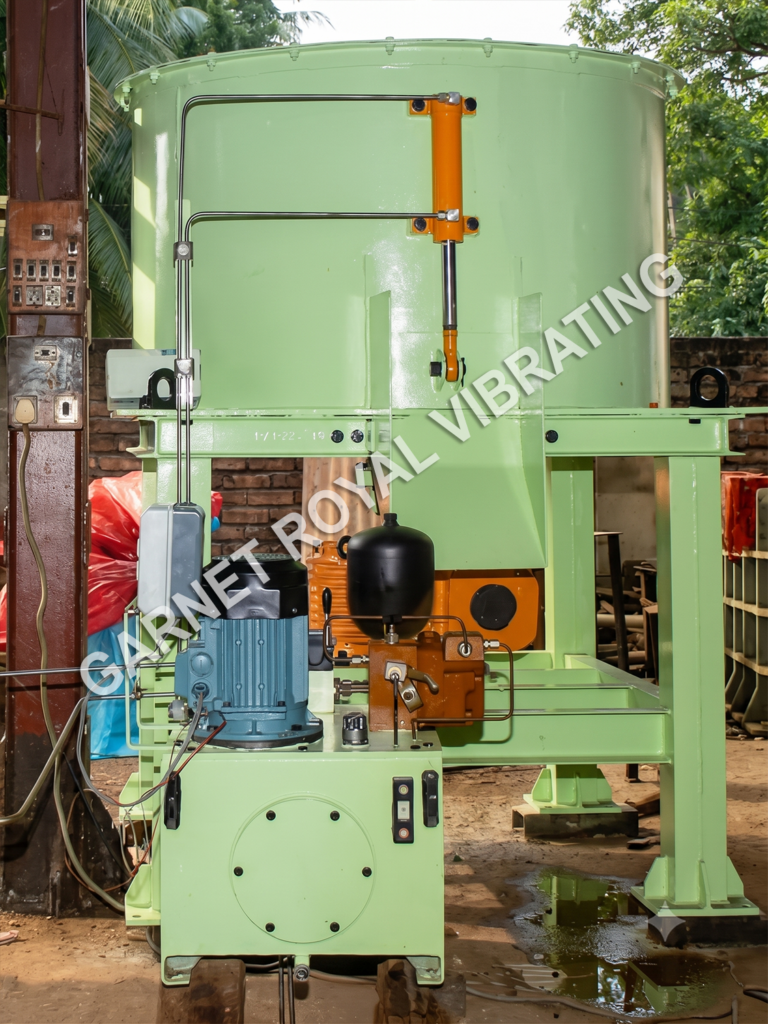
The Garnet Royal single pan mixer is a batch machine built for the homogeneous mixing of solids with liquid binders. Multiple ploughs sweep the charge across a heavy pan floor, and mulling rollers press and smear the material where the process calls for it. Light-duty builds handle 60 kg to 600 kg per batch on coal, coke, sand, mortar and china clay; heavy-duty builds take 120 kg to 1200 kg per batch on iron ore, chromite ore and manganese ore for briquetting and sintering.
Technical specifications
| Type | Single-pan plough-muller mixer, batch operation |
| Capacity | 100kg -10Tph. |
| Delivery Time | 45 Days |
| Main Market | All India, Nepal, Bhutan, Russia, Bangladesh, Zambia, Iraq. |
| Material | Steel |
| Minimum Order Quantity | 1 |
| Sample Available | Yes |
| Machine weight | 4 – 5 tonne |
Specifications are indicative and configured to your application. Share your material, feed size and required output for an exact model recommendation.
Frequently asked questions
What is the difference between plough action and muller action?
A plough is a blade that cuts through the bed and throws material across the pan, which distributes components and liquid quickly. A muller is a heavy wheel that rolls on the bed and rubs the material against the pan floor. Ploughs give you homogeneity; mullers give you coating and green strength. Many ore duties need both, which is why the two are combined on one arm.
How do I choose between pan, paddle and ribbon mixing?
Choose a pan mixer for intensive batch work on heavy, abrasive or sticky material that needs shear and liquid addition. Choose a twin-shaft paddle mixer for continuous throughput on free-flowing solids where speed matters more than intensity. Choose a ribbon blender for gentle batch blending of dry powders where particle integrity must be preserved and no liquid is involved.
Can the mixer be automated?
Yes. The standard machine runs on manual push-button control, which suits plants where an operator judges the mix by eye. A PLC option sequences the whole cycle — charging, dry mix time, metered liquid dosing, wet mix time and gate opening — and holds the recipe so shift-to-shift variation disappears. Load cells and a moisture probe can be added where tighter control is required.
How long do the wear parts last?
It depends almost entirely on the abrasiveness of the feed and the hours run. Ploughs, muller tyres and pan liners are all bolted rather than welded, so they are replaced in place without cutting or removing the pan. We supply the wear pattern for your material at the quotation stage and hold spares to your specification so a change can be planned into a shutdown.